Elevate Your Projects with Simple Melisha
A Font That Bridges Classic Calligraphy and Modern Design
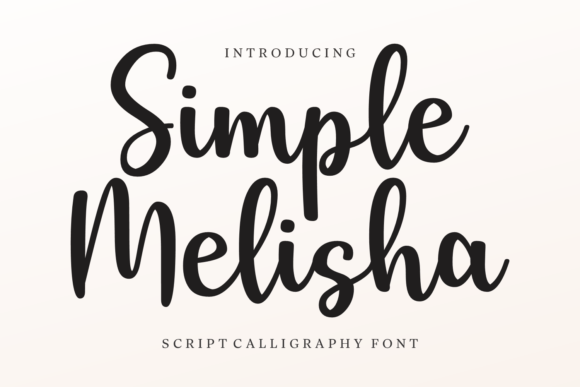
When you're working on a project that needs to feel personal yet polished, the typeface you choose can make or break the final result. Simple Melisha is a script font that sits at the intersection of timeless calligraphy and contemporary design sensibility. It carries the elegance of hand-lettered forms without feeling overly ornate or dated. The strokes are balanced — neither too thin to disappear at small sizes nor too thick to overwhelm a layout — which gives it a versatility that many script fonts lack.
What makes Simple Melisha stand out is its impeccable form. Every letter connects with a natural flow, and the overall rhythm feels intentional rather than mechanical. If you've ever struggled with script typefaces that look beautiful in isolation but fall apart in real-world use, this font addresses that problem directly. The letter spacing, the weight distribution, and the way individual characters interact with one another all reflect careful craftsmanship.
Where Simple Melisha Truly Shines
Understanding where a font performs best helps you make smarter design decisions. Simple Melisha excels in projects where warmth, personality, and sophistication need to coexist. Here are some practical applications where this premium font delivers real impact.
Brand Identity and Logo Design
For businesses that want to convey approachability without sacrificing professionalism, Simple Melisha works beautifully as part of a brand identity system. Think boutique bakeries, lifestyle consultants, wellness brands, wedding photographers, or artisan product lines. When used in logo design, it gives a brand an immediate sense of authenticity and human touch. Pair it with a clean sans serif font for body text, and you have a visual system that feels both refined and accessible.
The key here is restraint. Simple Melisha works best as a display element — a headline, a logo wordmark, a tagline — rather than as your primary text font. That's not a limitation; it's how most effective script fonts function in professional design.
Packaging and Product Design
If you design packaging for cosmetics, gourmet foods, candles, or handmade goods, you know how much a typeface influences a customer's first impression. Simple Melisha brings a tactile, crafted quality to packaging design that generic fonts simply can't replicate. Its balanced weight ensures legibility on labels, even at smaller sizes, while its elegant curves suggest care and quality.
Editorial and Publishing Work
In editorial design, Simple Melisha serves as an excellent choice for chapter titles, pull quotes, magazine headers, and feature spreads. Publishers working on cookbooks, lifestyle magazines, or coffee table books will find that it adds visual interest without competing with photography or illustration. It complements both serif fonts and sans serif typefaces, which makes it a flexible addition to any typographic toolkit.
Digital and Social Media Content
For web design, consider using Simple Melisha sparingly for hero text, call-to-action phrases, or decorative accents. At display sizes, it reads clearly and adds character. At smaller sizes, switch to a more legible companion font.
How the Right Script Font Influences Perception
When audiences encounter consistent, well-chosen typography across your touchpoints — your website, your packaging, your social feeds — it builds recognition. Over time, that recognition becomes trust. A commercial font like Simple Melisha, used consistently, contributes to a cohesive brand experience that feels professional rather than haphazard.
Consider how visual hierarchy works in practice. A bold, elegant script headline draws the eye first. Supporting text in a neutral sans serif or serif font carries the detailed information. This layering guides the reader naturally through your content, improving both readability and engagement. Simple Melisha plays the starring role in that hierarchy without stealing the entire show.
Practical Tips for Working with Simple Melisha
- Test font pairings before committing. Simple Melisha pairs well with geometric sans serifs for a modern feel or with traditional serifs for something more classic. Try combinations with typefaces like Montserrat, Raleway, or Garamond to see what resonates with your project's tone.
- Evaluate readability in context. Set your text at the actual size it will appear — on a business card, on a phone screen, on a product label — and step back. Does it hold up? Script fonts can lose legibility at small sizes, so always verify.
- Review the included styles and glyphs. Many premium fonts come with alternate characters, ligatures, and stylistic sets. Explore what Simple Melisha offers. Swapping in an alternate "s" or "t" can add subtle variation that keeps your typography from feeling repetitive across a large project.
- Understand the licensing. If you're using Simple Melisha for client work, merchandise, or products you sell, make sure your license covers commercial use. This is a detail that trips up even experienced designers, and it protects both you and the font creator.
- Don't overuse it. A script font works best as an accent. If every heading, subheading, and caption uses Simple Melisha, the design loses its impact. Reserve it for moments where you want to create emphasis or emotional connection.
A Typeface Worth Adding to Your Collection
Building a reliable library of design assets takes time, and not every font earns a permanent spot. Simple Melisha offers enough versatility and character to justify its place in your toolkit. Whether you're a freelance designer juggling diverse client needs, a small business owner crafting your own brand materials, or a hobbyist creating invitations and prints, this handwritten font brings a level of refinement that elevates finished work.
Good modern typography isn't about following trends. It's about choosing tools that serve the story you're telling. Simple Melisha tells a story of elegance, balance, and quiet confidence — and sometimes, that's exactly what a project needs.